High levels of toxic nitrates in water moving under and through South Auckland to harbour, research shows
  • Home
  • High levels of toxic nitrates in water moving under and through South Auckland to harbour, research shows

High levels of toxic nitrates in water moving under and through South Auckland to harbour, research shows

 15 July 2023      phil.pennington@rnz.co.nz

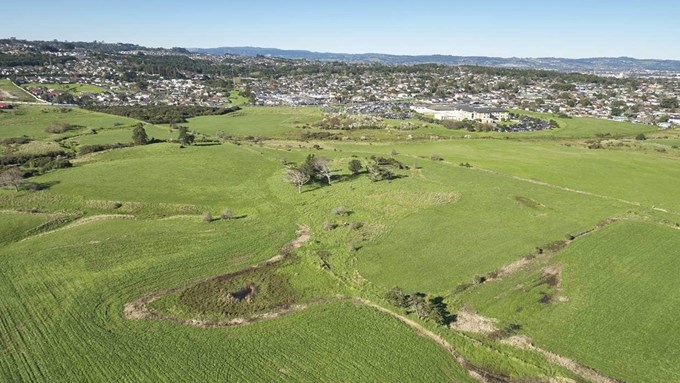
New research shows how water with a lot of toxic nitrates in it is moving under and through South Auckland.

The levels detected in the new GNS study in groundwater and streams around Pukekohe and Bombay are as high as 19mg per litre, eight times the ‘national bottom line’ in rivers.

It also shows just how long nitrates hang around: Even if all polluting stopped tomorrow, they would not be gone from groundwater till as late as 2080.

Auckland Council intends to use the GNS study to help with long-term planning in Franklin, where housing and horticulture were in tense competition.

“Concentrations exceed the Maximum Acceptable Value for drinking water and the National Policy Statement for Freshwater Management 2020 national bottom line for nitrate toxicity in rivers,” said the study, which councillors were briefed on this week.

Above the bottom line, algae and cyanobacteria growth can kill off freshwater fish and invertebrates.

“If nitrate loading stopped in 2024, improvement to below NBL (national bottom line) would only be seen by 2050 for Pukekohe and by 2080 for Bombay.”

The government agreed to exempt Pukekohe from the nitrogen toxicity targets when new water standards were introduced last year.

The high-nitrate water was not used for drinking, except maybe from a few private bores, but it was crucial for managing the environment to know more about it, and this new research was a big plus, council manager of natural environment strategy Dave Allen said.

“It certainly gives us a lot more understanding of the the age of groundwater … of the flow regimes and where some of the levels are high … and other areas where they’re low,” Allen said.

Levels tended to be higher upstream, and more diluted downstream.

“It will then give us a much greater understanding as to what mitigations we might need to consider in certain geographic areas, and what land use activities should be considered for some change,” he said.

Public health researcher Marnie Prickett, who is part of an environmentalists’ campaign for a stricter limit on nitrate of 1mg/litre, agreed they already knew levels were high – now this showed how the water moved.

“These are really, really big numbers,” Prickett said.

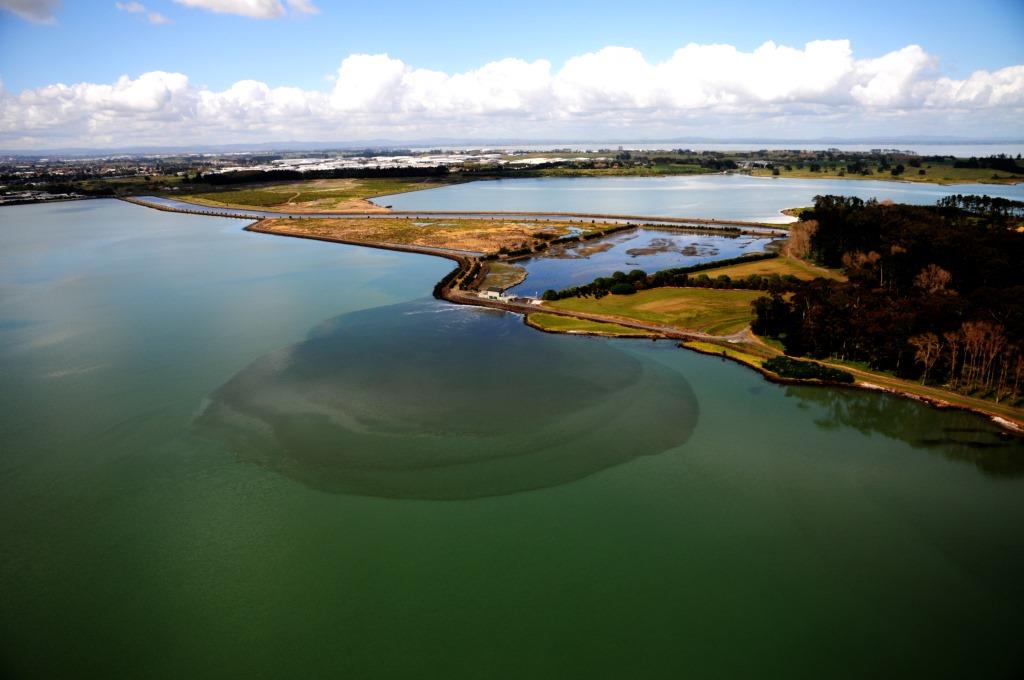
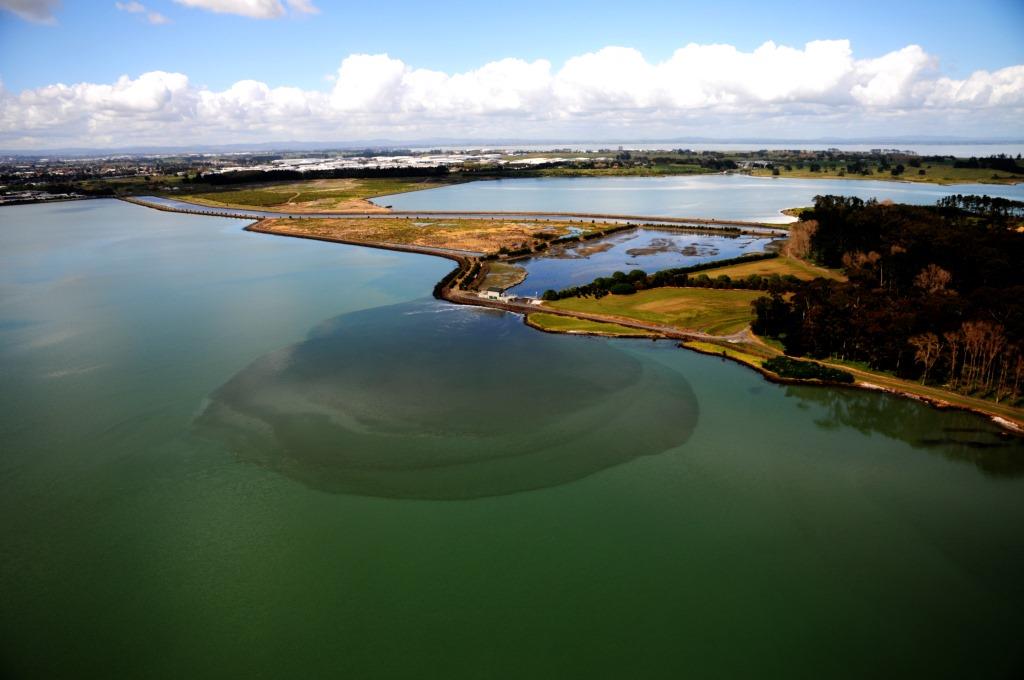
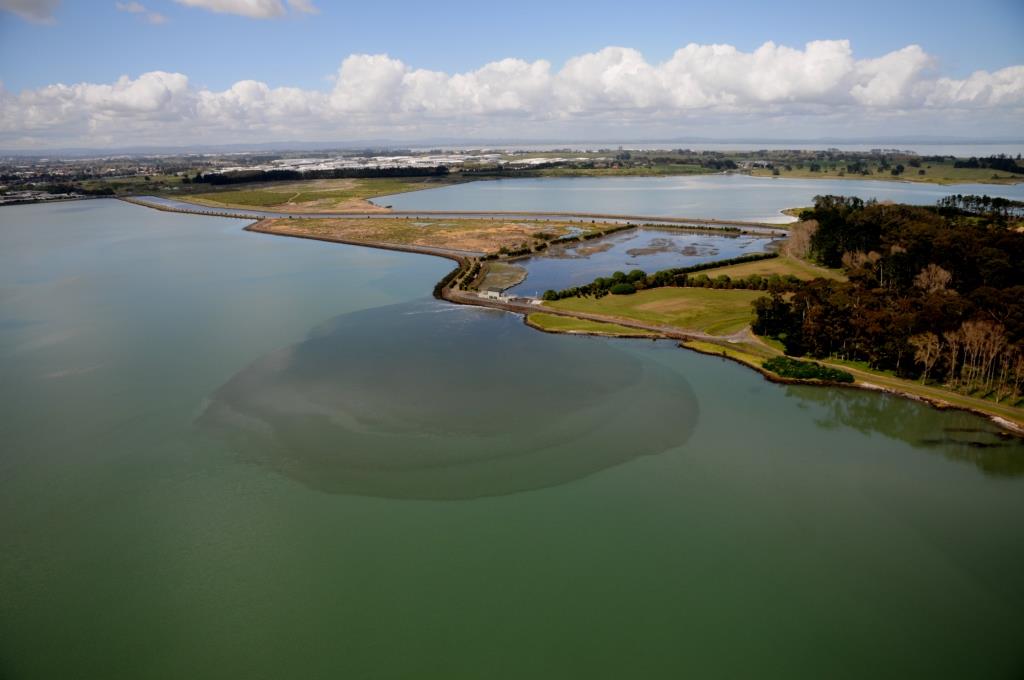
The study showed a lot of nitrates ending up in the Manukau Harbour.

“For many Aucklanders, perhaps the most distressing impact of this would be the harm to the health of Manukau Harbour.

“It also talks about the fact that it is partly coming from horticultural land … and the Auckland Council itself says that those horticultural systems are often over-fertilised.”

Horticulture NZ was approached for comment.

The study said: “Market gardening dominates the Pukekohe and Bombay basalts, which are subject to nitrate loss into groundwater… High nitrates from the springs dominate nitrate concentrations in receiving streams.”

The council was sending the study to mana whenua and growers, and Allen said it would help them discuss what to do together about it, including regulatory and non-regulatory responses to land use.

The area had competing demands and values, he said.

“We’re trying to, you know, look at how we can improve some of the environmental values here.

“The horticulturalists … have indicated that they have been reducing their fertiliser application over some decades.

“The question is, well, how do we track that, and how do we ensure that any changes that are proposed can actually be illustrated as having a positive bearing on the future state of nitrates within the groundwater resource of the Franklin area.”

They still needed other tools for that tracking, he said.

“We’re obviously very aware that the urban development into the South Auckland area will also have a bearing on some of the sort of outcomes for water.”

Prickett said there had been “very little pressure” on growers to reduce nitrogen loss “but it is absolutely possible”.

The national bottom line of 2.4mg/l was set in last year’s freshwater standards, alerting councils to not let the nitrate level in rivers rise above that.

Experts had said a Dissolved Organic Nitrogen (DIN) level of 1 mg/l was the best way to protect rivers.

The Ministry for the Environment had said it was considering the possibility of a 1 mg/l bottom line in the next year.
https://www.rnz.co.nz/news/national/493742/high-levels-of-toxic-nitrates-in-water-moving-under-and-through-south-auckland-to-harbour-research-shows

Te Puhinui land deal welcomed – Our Auckland

  • Home
  • Te Puhinui land deal welcomed – Our Auckland

Te Puhinui land deal welcomed – Our Auckland

The purchase of 7.6 hectares of land as part of a regeneration programme for Te Puhinui Stream has been welcomed by Manurewa Local Board chair Glenn Murphy.

Eke Panuku Development has bought the land, part of the Manukau Super Clinic site.

Murphy says the area is the only land along the stream path not publicly accessible, and it will become part of the Puhinui Stream corridor programme.

“This is a game­ changer, a chance to reinvest in what has become a largely urbanised catchment that flows into the Manukau,” he says.

“Eke Panuku has worked hard to guarantee restorative work as we clean up our streams, a priority for the board, mana whenua and the community.

Over time, the land will form part of a three-kilometre connection along the Puhinui from Botanic Gardens to Hayman Park in Manukau.

Manurewa-Papakura ward Councillor Daniel Newman says the move will be welcomed by Waiohua iwi as part of the environmental programme *Te Aka Raataa, itself part of Te Whakaoranga o te Puhinui, a wider plan.

“Te Aka Raataa will bring wetland development, with community feedback already informing design plans.”

Te Akitai Waiohua chair Karen Wilson says the deal is step towards what Te Waiohua has long envisaged, returning the land as a wetland and ngahere.

“It will help realise the intent of Te Whakaoranga, to return ora to the people and places of Te Puhinui.”

Eke Panuku priority location director Richard Davison says the deal will deliver more open space and a cycle and walking route to Manukau from the Gardens.

“And because this site is flood-prone, the focus will be on water-sensitive design to ensure it improves the health of the stream and supports residents during adverse weather.”

The Puhinui runs through the southern edge of the site, home to two areas of regenerating native bush planted by volunteers more than 10 years ago, which will be enhanced in the new park.

  • Waiohua iwi gifted the Te Aka Raataa name to acknowledge the landscape and white raataa vines that grew around the site. The vision is for a new climate resilient park through naturalising the stream to create native habitat.

https://ourauckland.aucklandcouncil.govt.nz/news/2023/07/land-purchase-welcomed

Citizens’ Assembly recommends direct recycled water for Auckland’s future water source

  • Home
  • Citizens’ Assembly recommends direct recycled water for Auckland’s future water source

Citizens’ Assembly recommends direct recycled water for Auckland’s future water source

A citizens’ assembly tasked with deciding what should be Tamaki Makaurau’s next future water source has determined direct recycled water would be the best solution to meet the city’s water needs beyond 2040.
 
The assembly – a group of 37 Aucklanders representative of the people of the city – based on age, gender, ethnicity, education and home ownership – presented their recommendation to our senior leadership team and board chair Margaret Devlin at Auckland University on Saturday. This follows a series of workshops in which the group explored six different options, and the implications of each.
 
The group’s report of recommendations reads: “We recommend the implementation of direct recycled water as the next source of water for Auckland. Engaging the Auckland public in education on the safety and quality of the water is necessary to facilitate acceptance.”
 
The group reached the conclusion that this option was “cost effective in relation to other options, environmentally friendly because it assists with reducing wastewater” and it “provides another source of water to secure Auckland’s water supply”.
 
Direct recycled water – where wastewater is treated to drinking water quality – is already used for drinking purposes in Singapore. It is not yet used as a source of drinking water in New Zealand.
 
Chief customer officer Amanda Singleton says the group’s recommendations will now be reviewed and considered by our team, before a formal response is made.
 
“Right at the beginning of this process we made a commitment to our assembly members, that we would have to have a really good reason to not go ahead with their recommendations. We’ll take a bit of time now to digest all the recommendations before we formally respond to them.
 
“We know the group hasn’t reached their decisions lightly. A huge amount of time has been spent learning about the water and wastewater industry from independent experts in the field. 
 
Over a period of eight weeks they have been exploring all the potential options, and the pros and cons that come with each. They’ve talked to mana whenua to make sure the views of Maori are considered, and the principles of Te Mana o te Wai are understood.
 
“They’ve really put their hearts and souls into this process to make sure they found the best path forward for Auckland’s water future. I think for many assembly members it’s been a really rewarding experience that’s given them not just a new appreciation for the water that comes out of their taps, but also for the views and perspectives of their fellow Aucklanders.”
 
Other recommendations include:

  • Watercare continues to investigate the feasibility of desalination
  • Watercare provides education and resources to consumers in reducing water usage.

A minority report also recommends two or three people from the assembly sit on a Watercare steering committee focussed on future water sources.
 
It’s understood to be the first citizens’ assembly in New Zealand for public decision-making of this kind.
 
Singleton says, we opted for a citizens’ assembly to deliberate on Tamaki Makaurau’s next major water source as it’s a decision that will impact all Aucklanders far into the future.
 
“This will impact all of us, and our children and grandchildren for decades to come so we really wanted to know what future water sources sits most comfortably with our customers. For a decision like this, it was never going to be enough to send out a survey or encourage people to submit their views online. With a citizens’ assembly, participants have the time to delve deep into the topic, deliberate over the different solutions and then come to a consensus decision.”
 
The assembly is designed and held in collaboration with Koi Tu: The Centre for Informed Futures at the University of Auckland. The workshops were held at the university’s Fale Pasifika.
 
A core part of Koi Tu’s work is exploring how different forms of citizens’ engagement could work to support better policy conversations and evidence-informed debate in New Zealand.
 
Koi Tu deputy director Dr Anne Bardsley says processes based on deliberative methods, such as citizens’ assemblies, emphasise the importance of talking issues through with access to expertise and evidence. They are designed to sit alongside and compliment traditional structures and methods of consultation.
 
“It was not an easy journey but the fact that the assembly members reached a consensus on something that was initially very contentious shows how powerful a process like this can be.
We’ve learnt a lot about how citizens approach these complex issues when given time to ask questions, deliberate and work towards a consensus.”
 
Dr Bardsley says the citizens’ assembly is one of a range of new innovative approaches the team is exploring at Koi Tu, as they seek to engage citizens in the discussion about the complex issues facing Aotearoa New Zealand.
 
She says traditional consultation by submission does not reach the diversity that exists in Tamaki Makaurau or in Aotearoa.
 
“We know that many citizens do not participate in consultations because of structural inequalities, language or educational barriers, or mistrust in the ‘system’. Opening up democracy to different voices should lead to more balanced, inclusive and well-informed outcomes.
 
“These inclusive processes might help us to make better decisions on complex issues where we face numerous trade-offs and uncertainties, and where the decisions have long-term consequences on how our future might play out.”

Click here to read more about the final recommendations.

Bid to scupper huge sewer tunnel

  • Home
  • Bid to scupper huge sewer tunnel

Bid to scupper huge sewer tunnel

Wayne Thompson – New Zealand Herald 28/1/2014
Manukau Harbour Protection Society incensed at having to take Waitemata wastewater.
Groups promoting Onehunga as a seaside town and the Manukau Harbour as a haven for recreation and wildlife are raising $140,000 for a court appeal against a $950 million sewer tunnel project.
“Come to our bake sale,” said Bronwen Turner, of the Manukau Harbour Protection Society.
“It’s a huge responsibility for a non-profit community organisation to take on but people are aghast when told about the project.”
Last month, Auckland Council-owned Watercare Services was granted resource consents to start boring for the Central Interceptor Project in 2017
Read More.

Auckland ferry plan floated

  • Home
  • Auckland ferry plan floated

Auckland ferry plan floated

Stuff – LAUREN PRIESTLEY 

Ferries might be the golden key to unlocking the Manukau Harbour. Auckland ferry giant SeaLink has just wrapped up an 18-month investigation into whether it could operate a service from Onehunga, to areas like Clarks Beach and Waiuku.

The proposal has given the push to open Onehunga Wharf up to the public a major boost.

Now it’s up to Ports of Auckland to come to the party.

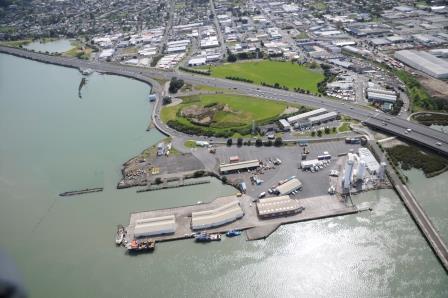
Manukau Harbour Restoration Society chairman Jim Jackson says public access would be a boost for the wharf. At present, the Ports of Auckland-owned wharf is closed to the public.

It is used for shipping container storage and as a base for the Sandford fishing fleet and Holcim Cement.

A lot can be done in a short space of time, Jackson said.

“Once you get out closer to the heads, it’s certainly a part of Auckland that not many Aucklanders currently have the opportunity to have a look at.

“Look at Matiatia on Waiheke. When I was growing up back in the ‘50s it was pretty rudimentary. But just look at what has happened in that time,” he said.

SeaLink managing director Todd Bolton says providing ferries from Onehunga Wharf is possible.

The company took over Pine Harbour Ferries in August and can now look at using those vessels in the Manukau Harbour, he said.

It stated this in a submission to the regional transport plan last year and the company has also made submissions on the unitary plan.

The company is now waiting on a sign of commitment from local government, Bolton said.

“We’re thinking within the next couple of years. That may be a little bit ambitious but we’re talking about the feasible future, we’re not talking about 20 years away,” Bolton said.

“We’re quite motivated to see if those things can happen sooner rather than later.”

Onehunga Business Association manager Amanda Kinzett says the proposal has the ability to make the wharf a real hot spot.

It could be developed to include fish markets and a buzzing nightlife scene – a huge improvement on the currently dilapidated and under-utilised area, she says.

“We’ve got a huge asset, the second largest harbour in Auckland,” she said.

“There are so many things that can be added here that would add value. We need to bring the Manukau Harbour to where it should be.”

Maungakiekie-Tamaki Local Board chairman Simon Randall says the board has raised the issue with the council arm that owns Ports of Auckland and has expressed an intention in its local board plan to get the public more access to the Manukau Harbour.

The Onehunga Foreshore Project, due to wrap up in July 2015, will bring people back to the Manukau Harbour for the “first time in a long time”, Randall said.

Ports of Auckland infrastructure and property manager Alistair Kirk says a decision has not yet been made about the future of the Onehunga port.

The company evaluated the use of the port in 2013 and results were expected by the end of the year.

But Ports of Auckland is now declining to comment on the outcome of the evaluation, as it “involves other parties”.

Kirk said the company is still open to discussions about the site.

– Central Leader

Big sewage project gets Resource Consent

  • Home
  • Big sewage project gets Resource Consent

Big sewage project gets Resource Consent

Fairfax Media  08/12/2013

A project that will see much of Auckland’s wastewater deposited into the Manukau Harbour has been given the green light.

But opponents are promising to appeal against the decision and say there are other options that should be considered.

Independent commissioners appointed by the Auckland Council have granted Watercare resource consent for its huge “central interceptor” project.

The project includes a 13km underground tunnel which will deliver up to 2 million cubic metres of sewage and stormwater to the Mangere treatment plant every year.

Water will then be treated and released into the Manukau Harbour.

The tunnel will run underneath the seabed and will replace ageing pipework that is “reaching the end of its useful life”, Watercare spokeswoman Belinda Petersen says.

A “significant” volume of untreated wastewater could flood the harbour if the existing pipes fail, she says.

“That consideration alone makes this a very important piece of work for us.”

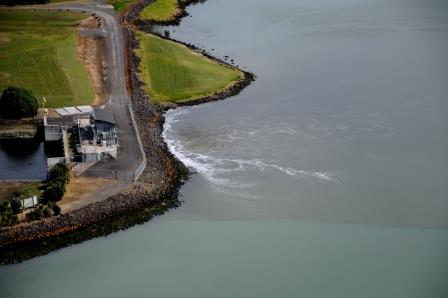
Watercare has also been granted consent to discharge untreated wastewater into the harbour in the event of a plant failure during a storm.

Construction on the project is expected to start in 2017.

The Mangere Bridge Residents and Ratepayers group and The Onehunga Enhancement Society is seeking legal advice on what further action it can take to put a halt to the project.

TOES spokesman Jim Jackson says they are not opposed to a wastewater system but would prefer a more “appropriate” one.

“We’re going to appeal it,” he says.

“It’s not appropriate to discharge untreated human waste into the harbour when there is an equipment failure,” he says.

“They say that will only happen every 250 years but that could be tomorrow or next week.”

He has suggested “satellite” processing plants that could deal with wastewater closer to the source.

“It is possible to clean up wastewater to a very high standard.”

Mangere Bridge group member Roger Baldwin says he is disappointed the initiative has the go-ahead despite more than 450 submissions against it.

They still have grave concerns about the effect large volumes of wastewater could have on the harbour’s water quality, native bird roosts and plant life, he says.

The group submitted a number of alternatives to the interceptor but are “not convinced” they got a fair hearing.

“Watercare had to show that they’d looked at alternatives but not that they’d investigated them in depth.”

Fellow member Ken Duff says the project is “seriously flawed” from an environmental standpoint.

“We don’t believe that the ecology of the harbour has been given proper consideration and if you don’t do that, you’ve got a serious problem with the future of the place,” he says.

Mr Duff says the group would like to see a full inquiry into the project before it proceeds.

Members will be presenting their alternatives to politicians in an effort to sway their opinions on the subject.

The central interceptor is expected to cost about $950m – up from the $800m forecast earlier in the year.

Watercare spokesman John Redwood says the latest estimate has been adjusted for inflation and the rising cost of goods.

WHAT IS THE CENTRAL INTERCEPTOR?

The Watercare project includes: 13km pipeline running under the Manukau Harbour from Western Springs to the Mangere treatment plant 6km of linking sewers connecting to existing lines.

An emergency pressure relief structure that will allow untreated wastewater to be discharged into the harbour if the plant fails in a storm.

A number of emergency air vents that will release trapped air bubbles during major downpours, including a 3m-tall vent on Kiwi Esplanade in Mangere Bridge near the entrance to Ambury Farm. 

– © Fairfax NZ News

Tiny chip can clean up the Harbour

  • Home
  • Tiny chip can clean up the Harbour

Tiny chip can clean up the Harbour

Joe Dawson – Central Leader 15/11/13

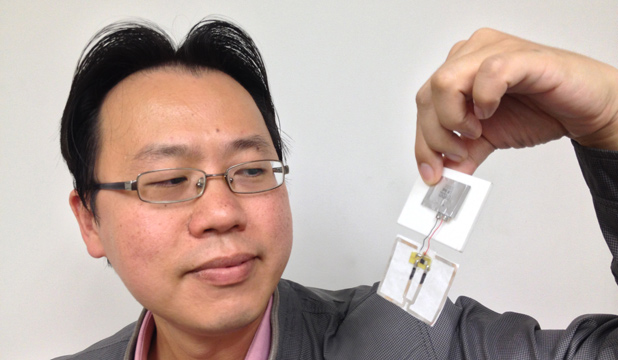
SEWAGE SOLUTION: Boon-Chong Seet with a device which could be flushed down toilets to identify points of cross-contamination between sewage and stormwater pipes.

A tiny microchip flushed down the loo could solve a long-standing environmental problem that has degraded the Manukau Harbour.

Sewage has been polluting stormwater which flows into the harbour for years. It is caused by by the accidental joining of what should be separate pipes during repair work.

Finding and repairing those connecting points has been a difficult task but a group of electrical engineering students may have cracked it. They were put on the case by Manukau Harbour and Onehunga stalwart Jim Jackson.

Mr Jackson approached AUT School of Engineering’s design and creative technologies lecturer Boon-Chong Seet with the idea of deploying the tags farmers use to keep track of cows to follow the sewage journey.

Despite the technology never being used in this way before, Dr Seet says a trio of students made a breakthrough

Read More.

Harbour profile push

  • Home
  • Harbour profile push

Harbour profile push

The Aucklander

Transforming the Onehunga wharf could unlock the entire Manukau Harbour, Joe Dawson reports on the aspirations of those who would like to see the waterfront opened to the public.  Advocates for the improvement of the Manukau Harbour hope a new study will boost its profile.

The Manukau Harbour Restoration Society is commissioning a $16,200 visitor and recreation study to be done by AUT.

The project is funded by the Manukau Harbour Forum and the society hopes it will help transform the Onehunga wharf into a bustling, public area.

Spokeswoman Bronwen Turner says the wharf is a strategic asset critical for making the harbour more accessible and has huge untapped potential for public and commercial use.

The Ports of Auckland-owned wharf is closed to the public.

Holcim cement uses one end and shipping containers are stored around the site.

Ms Turner says the wharf is “poorly used and maintained” and needs to be taken in a new, community-inclusive direction.

She sees it becoming a transport hub linking the Franklin area with Auckland, a busy fishing port complete with fish market and cafes, and an access point for recreational boaties.

“We think it is time for the use to evolve,” she says. “There’s just so much stuff that could happen on this wharf.”

Looking to history could point the best way forward. The Manukau Harbour used to be Auckland’s major portal and was once a busy waterway.

“There was all of this activity going on on the harbour, ferries going everywhere and up until the ‘50s there was a ferry service to Waiuku.

“So we’re at the point of almost going backwards. This is the sort of model we want to go to with, more community-based activities coming out of this wharf – ferry services, charter boats, water taxis. It unlocks the whole harbour.”

The Manukau Harbour Forum has supported the idea through its Unitary Plan submissions.

It says open space, public access and reserve linkages should be at the forefront of decisions about growth on the harbour.

The campaign is also supported by the Onehunga Business Association.

Manager Amanda Kinzett says there is support “all around the harbour” for change.

“There is so much that can be done. We’re not saying it can’t be a commercial operation but like anything you can have a combination.”

She says they will “keep on pushing this conversation”.

“It’s important, it’s our asset and it needs to bring value to the community.

“We’re finding ways it can do that.”

Ports of Auckland infrastructure and property manager Alistair Kirk says the company is assessing the future of the port.

“Onehunga Port is a commercial port and we have a commitment to our customers who use it. However we have had discussions with the Manukau Harbour Restoration Society and the Onehunga Business Association and are aware of the community’s aspirations for the harbour and port.

“We are currently evaluating long term options and have committed to responding to the stakeholders by the end of this year, once our evaluations are complete,” he says.  READ MORE

Championing the Manukau

  • Home
  • Championing the Manukau

Championing the Manukau

Jade Reidy – The Fringe – May 2013

For so long the plain Jane at a party of sparkling beauties, the Manukau has lately been getting some welcome attention. Two ‘suitors’ are championing the value of the country’s second largest harbour. The forum is made up of representatives from the nine local boards

that border the harbour, while the restoration society is a group of volunteer residents and others who use its waters, such as fishing and yacht clubs.
“The Manukau’s been mismanaged for 100 years,” says society president Jim Jackson. “There’s a generation’s worth of work to be done.”
Until the 1930s, Waikowhai Bay was a favoured picnic and bathing spot. Landfills, industries and the construction in 1960 of a wastewater treatment plant at Mangere rapidly polluted the harbour. While the wastewater ponds were decommissioned in 2003 and 13km of foreshore returned to its natural state, the harbour still lacks a management plan and has significant issues.
“We’ll get to you down the track, is the council’s current view,” says Neil Henderson, deputy chair of the Manukau Harbour Forum.
A marine spatial plan is being developed for the Hauraki Gulf, through the Unitary Plan process, but a similar one for the Manukau is further down the list. The forum is looking at ways to fast forward that process. Its inaugural meeting was held in May 2012 and a long-term vision for the harbour is being developed. The forum also exists to offer a cohesive response to problems that have multiple causes, such as removal of Pacific oysters and coastal erosion. It can tap into council resources for practical projects.
A new idea that’s captured the forum’s attention is to have the harbour declared a location of international importance for the migratory birds. Sandpipers, dotterels, godwits, amongst others, fly thousands of kilometres each year from the far north such as Alaska, Siberia and Mongolia, converging on the Manukau along with native birds to make the harbour one of the world’s most significant wading bird sanctuaries.
Jackson says that, while the focus on avian protection is valuable, the marine life of the harbour is often neglected because it’s less visible. The society is working with NIWA and universities on various issues from sediment to mangroves, using Raglan Harbour’s restoration as a model, and is looking to research ways that fish stocks could be improved, without preventing recreational or commercial fishing.
Both the forum and the society are keen to work with Maori as mana whenua and see more progress on recommendations in The Waitangi Tribunal’s Manukau Report of 1985. It found the Crown had failed to recognise Treaty rights to land and traditional seafood resources and had not provided the protection promised. Settlement documents are still pending.
One of the biggest concerns is Watercare’s plan to build a new 14km tunnel bringing combined stormwater and sewage from central and eastern suburbs to a huge holding tank at Mangere. This would mean twice the amount of treated water each day being released into the harbour, from 360 million litres to 720 million.
“Have you seen where the water discharges at Puketutu?” says Jim. “Already it looks like Huka Falls except it’s brown.”
While the Manukau has a long way to go before it becomes a must-see tourist destination, both advocacy groups are putting its potential on the council’s map.

Call to save the Manukau Harbour

  • Home
  • Call to save the Manukau Harbour

Call to save the Manukau Harbour

Rowena Orejana NZ Herald, The Aucklander  15/03/2012

As a lad in the 1950s, Jim Jackson played and swam on Onehunga’s beaches. He’s lived in the seaside suburb, one of Auckland’s oldest, most of his life, and his childhood memories are of his mates running down the sand, their parents looking on, yachts sailing in the bay, the wind ruffling the tall seagrasses.

Sixty years on, the boats, families and children have given way to more than a kilometre of rock wall, the motorway to the airport, power pylons, and 305 million litres of treated wastewater flushed into the harbour each day.

On Manukau Harbour’s northern coast, Cornwallis was designed in England – it was supposed to be one of the new colony’s first cities. Bronwen Turner’s family have lived in the quiet, bushclad coves since 1889. From her home she watches orca swimming.

Silt, however, clogs the beaches and estuaries where the Waitakere Ranges meet the harbour.

“I remember that when the tide went out, there was like a lawn of green seagrass when you looked back from Little Huia to Big Huia. There were all kinds of shells you could find on that seagrass. Now it’s rotten and silted out. Big Huia’s always been a shallow bay but it’s even more so now,” she worries.

Read More.

SUBSCRIBE TO OUR NEWSLETTER

KEEP UP TO DATE WITH OUR NEWS AND EVENTS